Monday, 4 July 2011

Post 03 - Project Update Part One: Title & Outcome


I have decided to go against my initial proposal created in the Research Practice module. I will be using one of my own rig/s, or create a new one for this project (as supposed to using the 'Dee character' by Manuel Sierra). This, as suggested by my supervisor would add to the project's uniqueness.

The new title for the project is as follows:

Game Mortality: A study into the effective techniques and methods for communicating character vitals through decrepitude and combat related death sequences.

The reason for the change is that the last project title suggested that I would explore emotion in games. This sounds interesting but was far too vague. I did a sub project last year where I animated an injury walk cycle. I enjoyed this and thought this would be a good opportunity to build on this interest and look into computer game examples for this project. Games that will be of influence include:

Game / Source        Point of Interest

- Dead Space 2             Close combat & injury cycles
- Halo Reach                  Assassinations / Stealth move
- Assassin’s Creed 2    Combat and use of weapons
- Resident Evil 5            Injury and counter cycles


I aim to create a series of short animations (approximately 6-8), depicting a range of statuses, as well as a series of close combat / assassination actions. Some of these will be cycled and others will be short action animations sequences. As the research orientates around video-game theory, these sequences will be created with a video-gaming context in mind. This will require research into secondary motion, as well as body language and the conveyance of thought. I feel that this has the potential to be interesting and will allow me to explore a range of possibilities.

I have also updated my research practice report with these amendments. This is a change for the better as the project is now more focused towards an end result. More details will follow shortly.


Dead Space 2 Struggle & deaths - LINK (18+)
Halo Reach Assassinations Clip One - LINK (15+)
Halo Reach Assassinations Clip Two - LINK (15+)
Assassin's Creed 2 Combat - LINK (15+)
Resident Evil 5 Advanced Melee Combat - LINK (15+)
Resident Evil 5 Deaths & injury - LINK (15+)


Monday, 20 June 2011

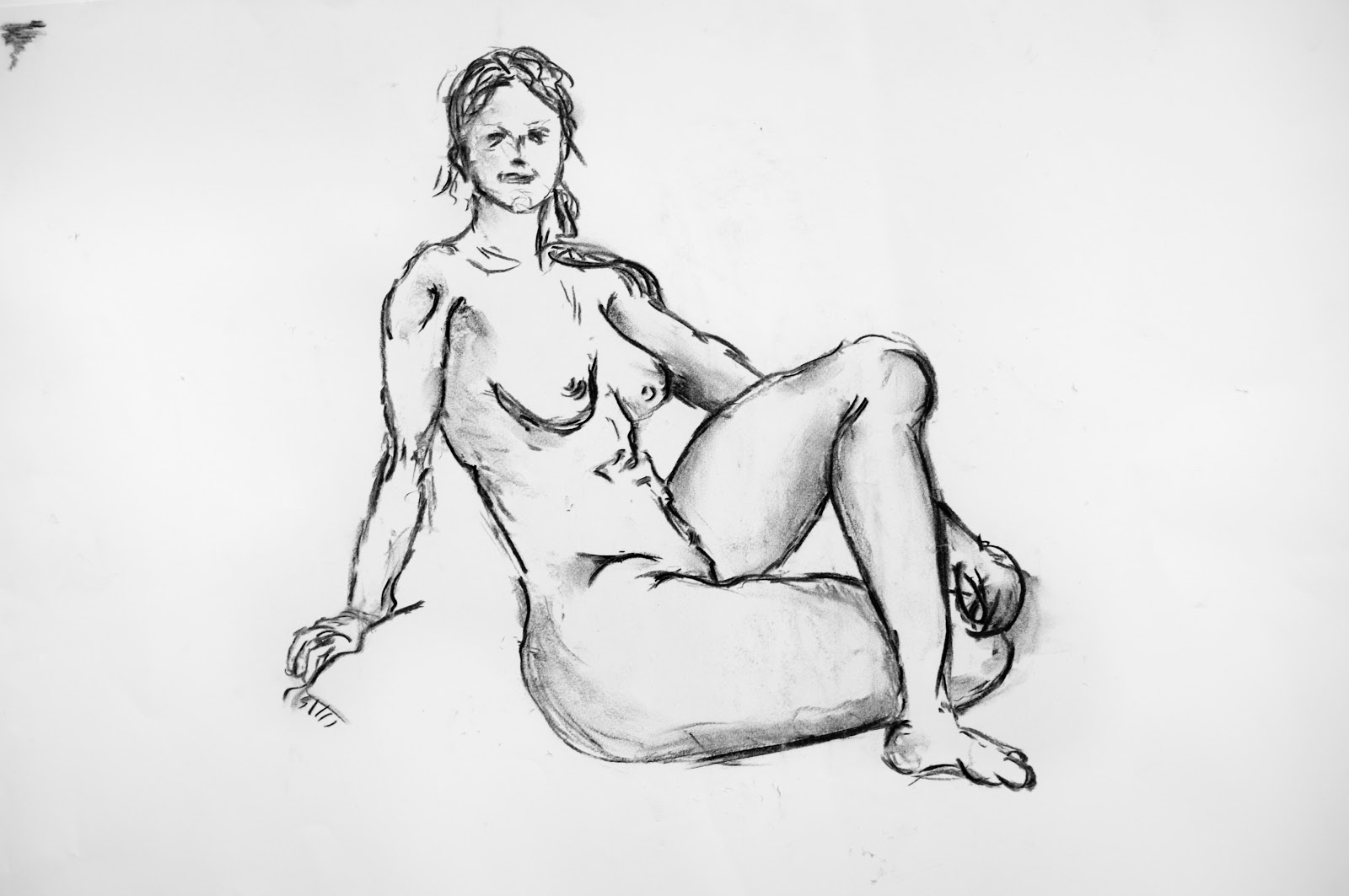
Post 02 - Life Drawing Sessions

Following on the Richard William's book and DVD set, he stresses the need for animators to be able to draw. He suggests that attending life drawing classes gave him a much better understanding of anatomy, as well as proper weighting and proportion.


I thought I would follow this advice and decided to investigate a local life drawing organisation and have been to a couple of sessions. I felt that this was a good move and I enjoyed the experience. I have done life drawing during about 10 years ago so am familiar with the set up. I plan on attending these classes every week, the next session being Wednesday the 22nd of June.

Whilst I am doing this, I have also been looking into some more details of my final projects. My proposed idea was to look into 'emotion in animation, using games as a source of reference'.


I have been looking at developing my skills in the animation package Maya and will be looking into using items such as the Graph Editor and Trax Editor as well as exploring the Human IK solution, which is new in Maya 2012.

Ideas include developing a series on injury walk cycles as well as attacks and death sequences. A great outcome of this could be to be able to blend them together in Maya, but these are a few ideas at this stage. I feel that this could be a good way to go as it will allow me to demonstrate emotion in the face and body.

I have developed this walk cycle. It is pretty basic, but it does use the Graph Editor in places and is merely a test to try and use the types of tools needed. This was done in 3ds Max, but I plan to move onto Maya shortly.


Post 01 - Looking back and ahead: Initial Research


Looking back at the Research Practice module, I have come to realise that although it was a good way of discovering what area/s I would be interested to explore; it unfortunately was more concentrated on writing an ACM report and left me with a lack of project detail / clarity (for example, I'm going to explore emotion in character animation, but do not know at this stage how many animations, which emotions and so on).

I want to point out that the 'Research Practice' blog has all of the information and research regarding the thought processes and steps which have led me to this stage. I have done a broad range of research so far in order to try and fully form my ideas as I want to explore something at the forefront of the games / animation industry, but I also want the resulting artefact/s to be used in a show-reel (1-2 minutes with a range of subject matter).


Thinking Animation

Another book I picked up when researching animation is Thinking Animation by Angie Jones and Jamie Oliff. This so far has been useful in breaking down the working structure of a CG animator. Chapters such as 'The Thursday Animator' analyses an animator's working week and offers advice from many artists in the industry. Where as the chapter 'Every Frame Counts' explains some of the software universal tools such as key frames and the Graph Editor (a tool which I shall be using a lot of).


Richard William's Animated Survival Kit 'Animated'

My research has started with watching (whilst making notes) Richard William's Animator's Survival Kit DVD series (16 in total). This has really helped me to begin to understand what animation fundamentals have already been established and what can be used to create believable, successful animations. Topics which are covered in these lectures include: animation structures, overlapping motion, breaking joints, dialogue, and work pipelines. I have also purchased the book (title as above) as it is a great reference book and one which allegedly any animator should not be without. As Richard puts it himself, it demonstrates 'the sophisticated use of the basics'.


Both of these books and the DVD set also mentioned in my Research Practice blog.